


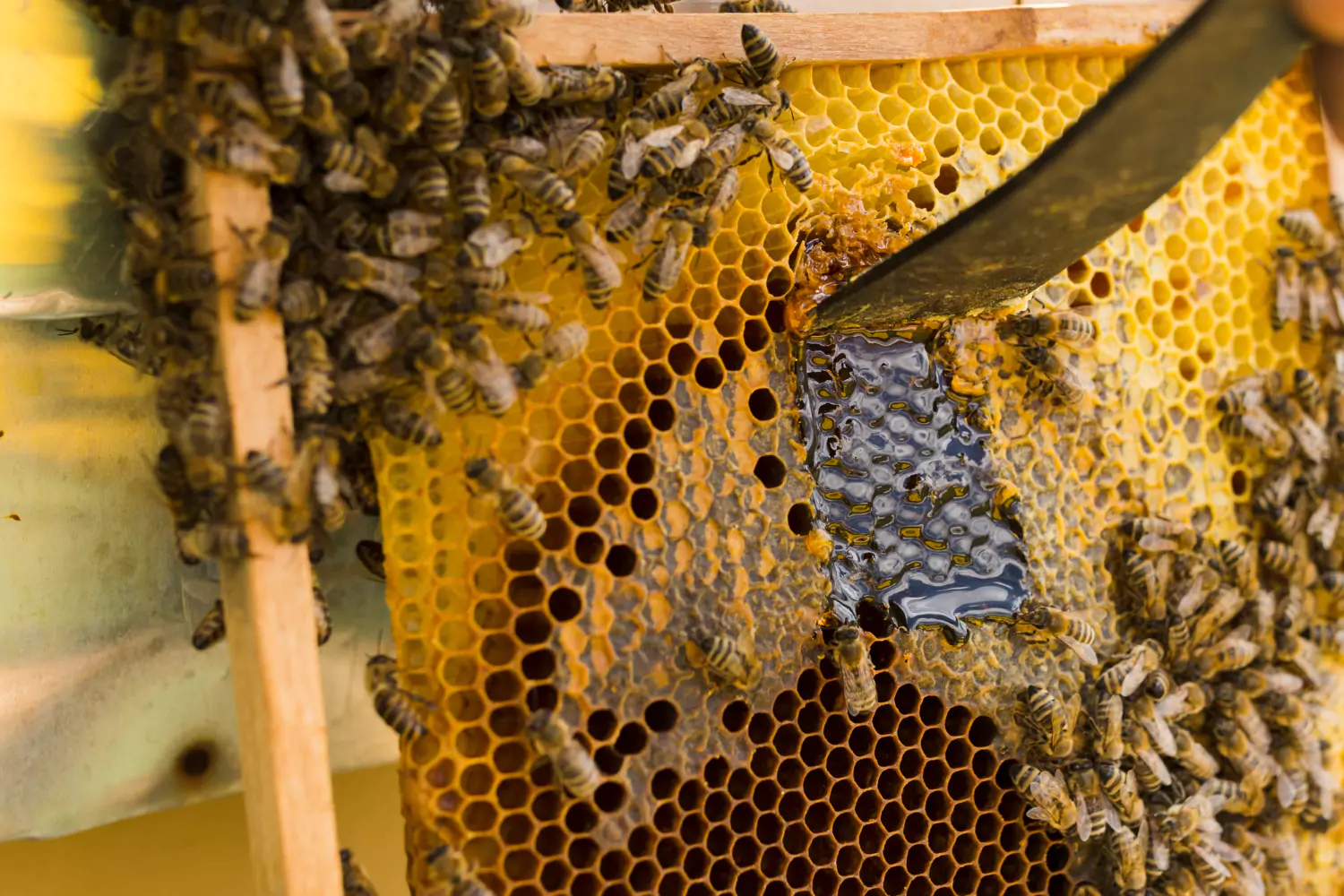
Harvesting honey is one of the most rewarding parts of beekeeping. After months of careful hive management, it’s time to collect the sweet fruits of your bees’ labor. This step-by-step guide will walk you through the process of harvesting honey from your hive, ensuring a successful and sustainable harvest that’s beneficial for both you and your bees.
Step 1: Choose the Right Time to Harvest
It’s important to harvest honey at the right time to ensure that the honey is fully ripened and the bees have enough reserves for themselves. Most beekeepers harvest honey in late summer or early fall when the bees have had plenty of time to collect nectar and produce honey.
What to Look For:
- The honeycomb cells should be capped with wax, indicating the honey is ready.
- There should be at least one super (a box filled with frames) of capped honey for you to harvest.
- Make sure your bees have enough honey for winter—leave them around 60-80 pounds of honey depending on your region.
Step 2: Gather Your Tools
Before you begin, make sure you have all the necessary equipment for a smooth and efficient harvest.
You’ll Need:
- Bee suit and gloves
- Bee smoker
- Hive tool
- Bee brush
- Honey extractor
- Uncapping knife or fork
- Strainers and buckets
- Glass jars or containers for storing honey
Step 3: Calm the Bees
When you open the hive to harvest honey, the bees may become defensive. Using a bee smoker helps to calm them and make the process less stressful for both you and the bees.
How to Use a Smoker:
- Light the smoker with natural fuel like pine needles or twigs.
- Give a few puffs at the hive entrance and under the cover.
- The smoke masks alarm pheromones and distracts the bees, allowing you to work calmly.
Step 4: Remove the Honey Supers
Next, carefully remove the supers (the boxes where bees store their honey). Be gentle to avoid crushing any bees and use your hive tool to lift the frames.
Steps to Remove Honey Supers:
- Use a hive tool to pry open the supers.
- Remove one frame at a time and check that it’s fully capped.
- Brush off any bees clinging to the frames using a bee brush.
Step 5: Uncap the Honey
Once you’ve removed the honey frames, it’s time to uncap the honeycomb. This involves removing the thin layer of wax that seals the honey inside the cells.
How to Uncap Honey:
- Use an uncapping knife or fork to gently scrape off the wax caps from both sides of the frame.
- Make sure to do this over a tray to collect any drips.
Step 6: Extract the Honey
Now, it’s time to extract the honey. The most common method is using a centrifugal honey extractor, which spins the frames and forces the honey out of the comb.
How to Use a Honey Extractor:
- Place the uncapped frames inside the extractor.
- Manually or electrically spin the extractor to release the honey from the comb.
- The honey will collect at the bottom of the extractor and can be drained into a bucket.
Step 7: Strain and Bottle the Honey
After extraction, the honey may contain bits of wax or debris. Straining the honey ensures it’s clean and ready for consumption or sale.
Steps to Strain and Bottle Honey:
- Pour the extracted honey through a fine mesh strainer into a clean bucket.
- Allow the honey to settle for a few hours to remove any air bubbles.
- Once strained, transfer the honey into jars or containers for storage.
Step 8: Store the Honey
Honey is naturally resistant to spoilage, but it’s important to store it properly to preserve its quality.
Tips for Storing Honey:
- Keep honey in a cool, dry place away from direct sunlight.
- Store honey in airtight containers to prevent moisture from getting in, as this can cause fermentation.
- Honey can crystallize over time, but this is a natural process. To return it to a liquid state, gently warm the jar in hot water.
Step 9: Clean Up and Return the Supers
After harvesting, clean your equipment thoroughly to prevent contamination. You can return the extracted frames to the hive for the bees to clean up and reuse the wax for future honey production.
Post-Harvest Clean-Up:
- Scrape off any leftover honey or wax from your tools and extractor.
- Rinse the equipment with warm water (no soap) to remove any residue.
- Return the supers to the hive so bees can recycle the wax for the next season.
Conclusion
Harvesting honey is a gratifying experience that rewards your hard work as a beekeeper. By following these steps, you’ll ensure a smooth and successful harvest while maintaining the health and productivity of your hive. Remember to be patient and always prioritize the well-being of your bees during the process. Happy harvesting!